Recommended Products
Sponsored

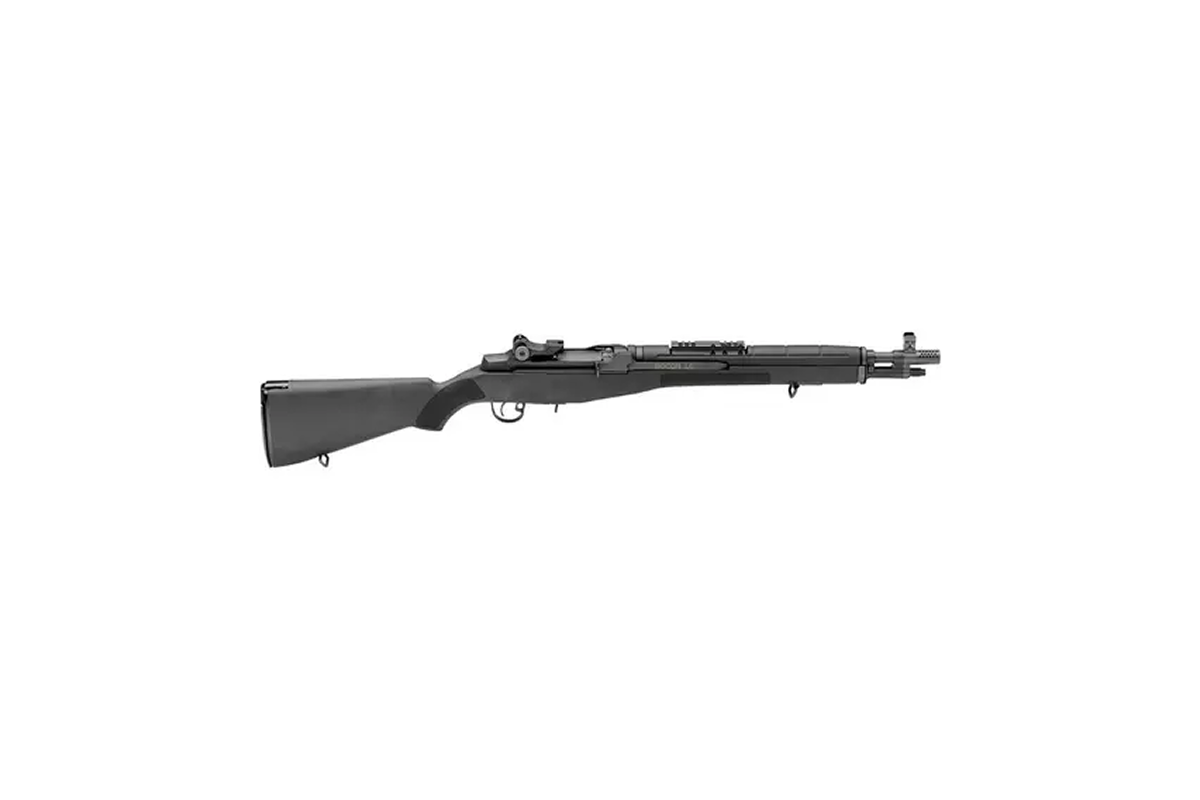
The Springfield Armory SOCOM 16 is a compact semi-automatic rifle derived from the M14 platform and adapted for modern shooting. Inspired in part by the scout rifle concept introduced by Jeff Cooper, it combines the power of the .308 cartridge with modern accessories such as forward optics rails and red-dot sights. While it does not fully meet the original scout rifle specifications, the SOCOM 16 demonstrates how modern technology can reinterpret and expand upon Cooper’s versatile rifle philosophy.
The idea of the “scout rifle” was first popularized in the early 1980s by firearms instructor and former Marine officer Jeff Cooper. Cooper believed a rifle could be designed as a versatile, lightweight tool suitable for hunting, defense, and field use. His ideal scout rifle would be compact, accurate, and quick to deploy.
Cooper envisioned a rifle chambered around the .308 caliber range with a maximum weight of roughly eight pounds and an overall length of under 39 inches. It would feature a forward-mounted, low-power optic to maintain peripheral vision and allow fast target acquisition. Backup iron sights, a weather-resistant stock, and a detachable magazine were also important elements. Additionally, the rifle should be capable of about two-minute-of-angle accuracy and support sling techniques that aid stability.
The concept attracted widespread interest among shooters, leading to multiple conferences and discussions among gunsmiths, firearms writers, and instructors to refine the details of what a true scout rifle should be.
Although Cooper formalized the concept decades later, some earlier military rifles displayed similar characteristics. During World War II, German forces experimented with optics mounted on service rifles such as the Karabiner 98k.
One example was the Zf41 scope, a low-magnification optic mounted forward on the rifle. While its performance was widely criticized due to limited magnification and poor usability, the configuration resembled what Cooper would later describe as a scout-style optic setup. Roughly 100,000 of these scopes were produced by the end of the war, making them one of the most common German rifle optics of the period.
Despite these early attempts, the scout rifle concept did not gain significant traction until decades later when modern firearms manufacturers began exploring the idea more seriously.
For many years, scout rifles were primarily custom builds crafted by individual gunsmiths. As interest in the concept grew, manufacturers eventually began offering factory-produced models.
Companies such as Steyr Arms, Ruger, and Savage Arms introduced bolt-action rifles specifically designed around Cooper’s criteria. These rifles generally included forward optic rails, detachable magazines, and lightweight synthetic stocks.
However, most of these rifles remained bolt-action designs, staying close to Cooper’s original philosophy.

A different path toward the scout rifle concept comes from the M14 rifle. Introduced in 1957, the M14 was intended to replace several earlier American service weapons, including the M1 Garand and other infantry arms.
Although its service as the primary U.S. infantry rifle was relatively short, the M14 developed a strong reputation for reliability, power, and accuracy. Over time, the platform gained a dedicated following among civilian shooters.
To meet civilian demand, Springfield Armory began producing semi-automatic versions of the rifle under the M1A name. These rifles maintained the general design and chambering of the original military platform while adapting it for the commercial market.
One of the most modern adaptations of the M1A platform is the Springfield Armory SOCOM 16. This rifle condenses the capabilities of the M14 into a shorter and more maneuverable configuration.
The SOCOM 16 features a 16-inch barrel and feeds from standard 20-round M14 magazines. Modern versions often include a synthetic adjustable stock with accessory mounting points and rails for optics. These upgrades make the rifle more adaptable to contemporary shooting styles.
A forward Picatinny rail allows shooters to mount optics in a scout-style position, while additional mounting options accommodate modern red-dot sights. This flexibility enables the rifle to be configured for both close-range defensive shooting and general-purpose use.
Advancements in optics technology have significantly changed how rifles are used today. Compact red-dot sights such as those produced by Trijicon allow shooters to aim quickly with both eyes open while maintaining awareness of their surroundings.
These sights are extremely durable and feature adjustable brightness levels suitable for a wide range of lighting conditions. Long battery life and rugged construction have made them common on modern defensive and tactical rifles.
Combined with accessories such as improved muzzle devices and optional suppressor mounts, these upgrades push traditional rifle designs like the SOCOM 16 firmly into the modern era.
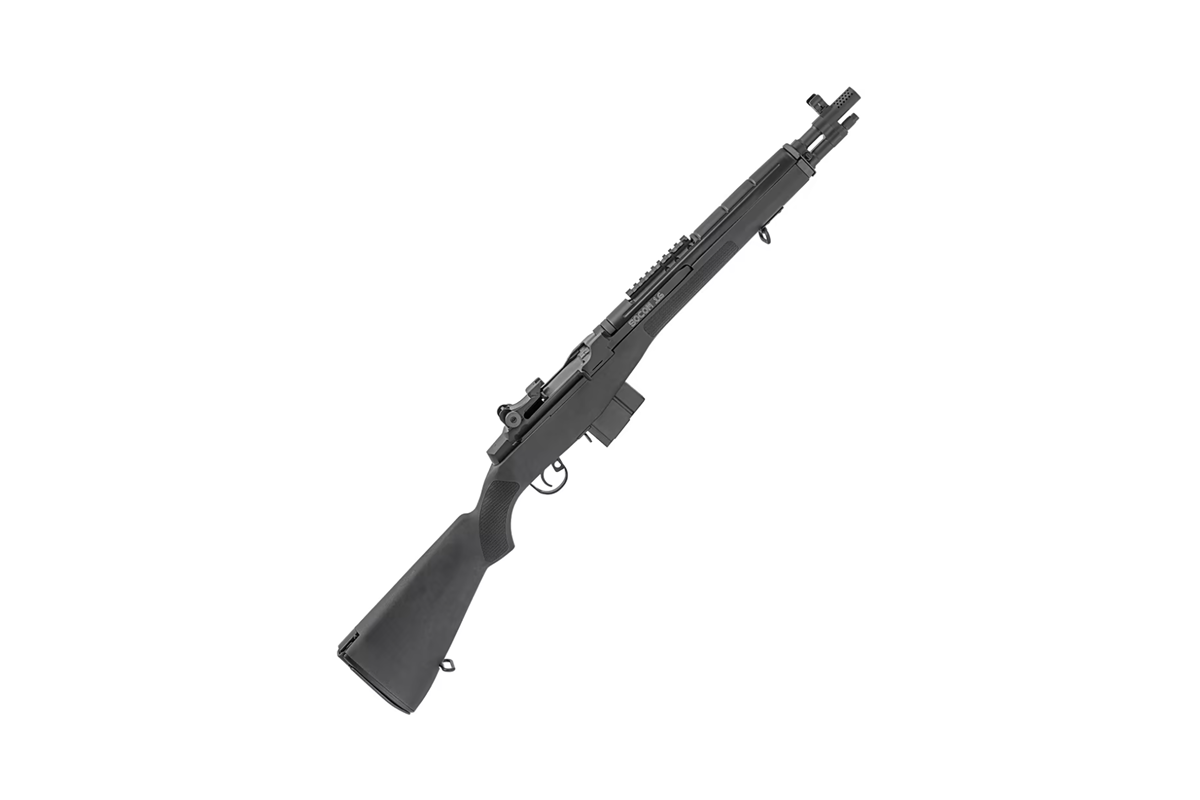
While the SOCOM 16 does not strictly meet every specification laid out by Jeff Cooper such as weight limits or bolt-action operation it captures much of the spirit behind the scout rifle concept. The rifle is compact, powerful, and capable of rapid target engagement.
Modern materials, optics, and accessories have transformed what Cooper imagined decades ago. Although technology has evolved far beyond what was available when the concept was first proposed, rifles like the SOCOM 16 show how the original idea can be adapted to contemporary shooting needs.
Get the latest 2A news and updates, plus save on gear, guns, ammo, and accessories. Join over 1.1 million readers for our daily email
By clicking one of the buttons above, you agree to our Terms & Conditions and Privacy Policy. Cancellation takes effect at the end of the next business day.
Firearms news where precision meets passion, and every shot matters. We're proud champions of history's patriots and steadfast defenders of the Second Amendment.