Recommended Products
Sponsored

The bullpup rifle design is far from new. Concepts placing the action and magazine behind the trigger date back more than a century, including early rifles like the Thornycroft Bolt‑Action Rifle and the post-World War II British EM‑2 Rifle.
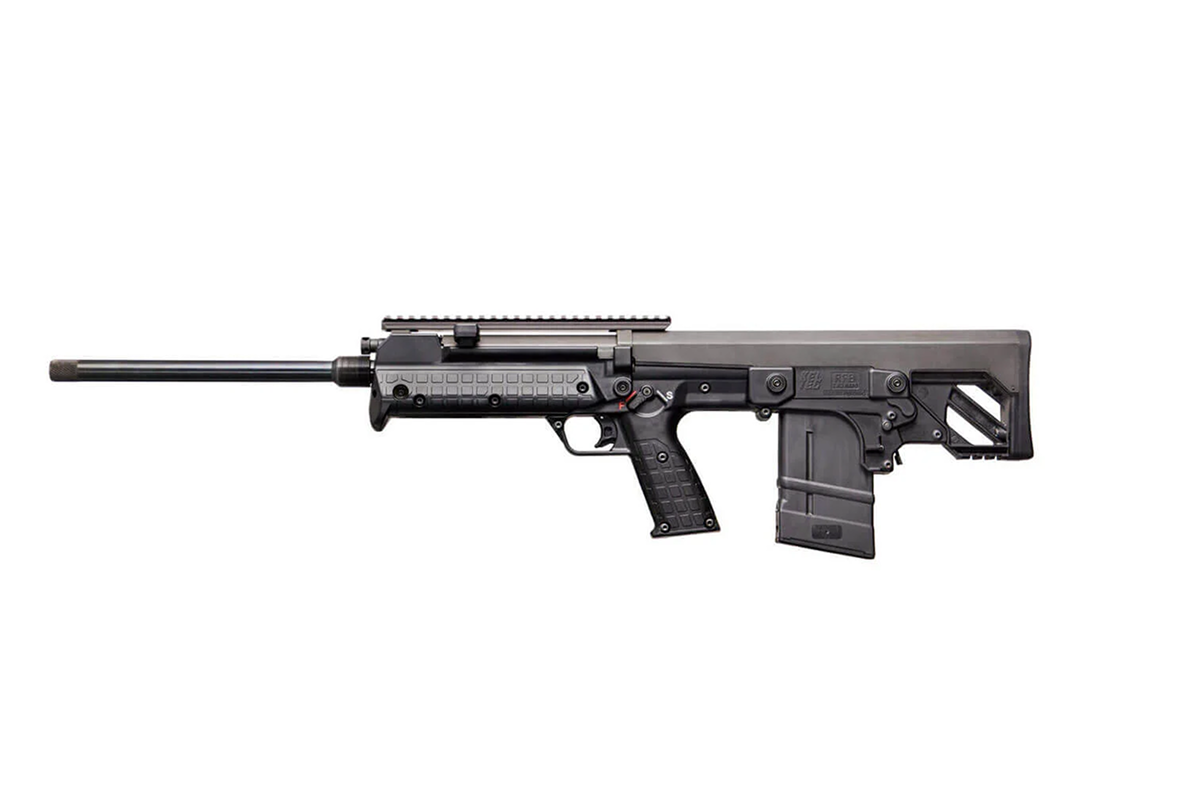
The core advantage of the bullpup configuration is simple: compactness. By placing the action behind the trigger group, a bullpup rifle can maintain a full-length barrel while being significantly shorter than traditional rifle layouts. This makes the design particularly useful in vehicles, urban environments, and other tight spaces where maneuverability matters.
However, bullpups have also historically faced criticism. Concerns often include slower reloads, the chamber being located close to the shooter’s face, side-ejection issues when shooting from the opposite shoulder, and triggers that can feel less refined due to the long linkage between the trigger and firing mechanism.
One modern rifle designed to address these challenges is the RFB (Rifle, Forward-ejection Bullpup) produced by KelTec. Chambered in .308 Winchester, the rifle is a gas-operated semiautomatic platform that delivers full-power rifle performance in a remarkably compact package.
Despite featuring an 18.5-inch barrel, the RFB measures only about 27.5 inches in total length. This makes it nearly a foot shorter than many traditional rifles with comparable barrel lengths. The rifle includes a threaded muzzle with an A2-style flash hider sized for the .308 chambering.
The handguard is made of polymer and includes molded grip panels along with a front lip acting as a hand stop—an important safety feature on bullpup rifles where the shooter’s support hand sits closer to the muzzle.
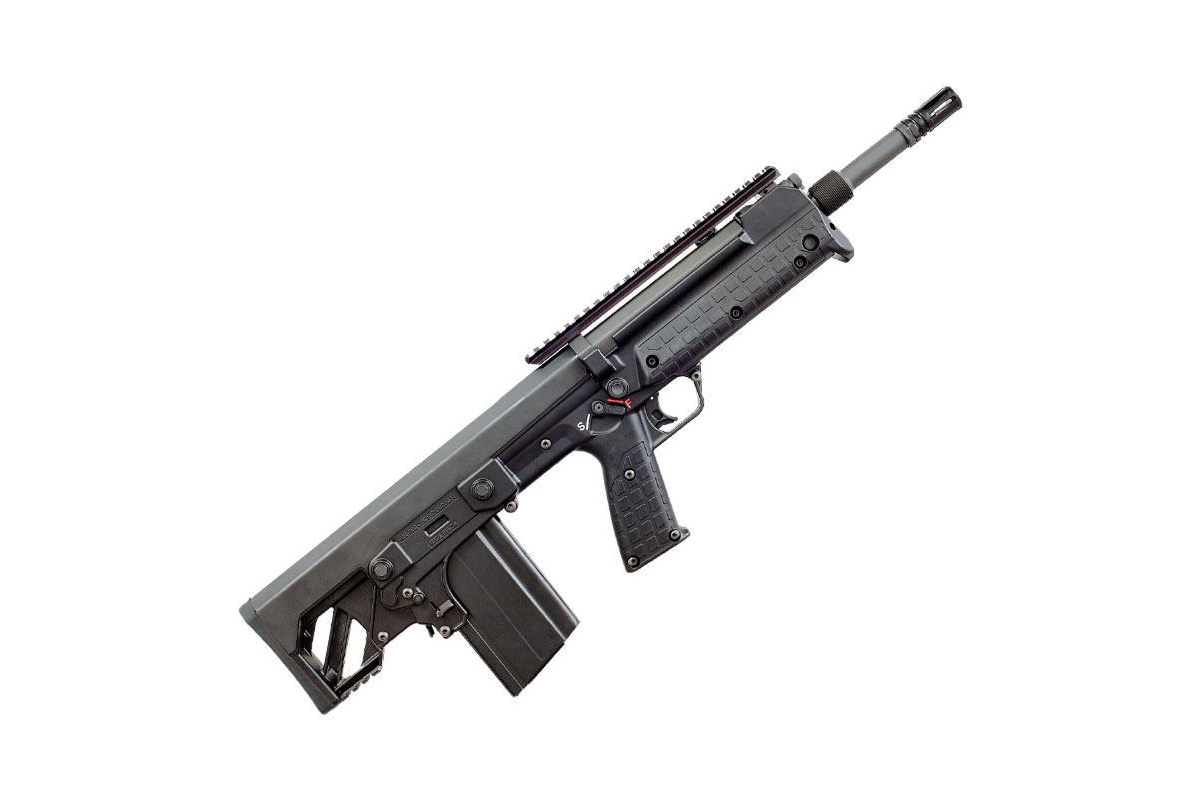
In testing, the rifle weighed just over nine pounds once optics were installed. The bullpup layout places most of the weight toward the rear, which can help with maneuverability but also directs recoil straight back into the shoulder.
While the recoil impulse is firm due to the .308 cartridge, the design eliminates much of the muzzle rise common in traditional rifles of the same caliber. Proper shoulder placement is important, however shooters who attempt unconventional “chest holds” common with lighter rifles may find the recoil uncomfortable.
During evaluation, the rifle was paired with a red-dot optic setup consisting of the Sightmark M‑Spec FMS Red Dot Sight and a Sightmark XT‑3 Tactical Magnifier. This combination allows shooters to engage targets quickly at close range while adding 3× magnification for longer shots.
The setup reflects the intended role of the RFB: a compact rifle capable of operating effectively in urban or suburban environments while still delivering the power and range of the .308 cartridge.
For precision testing, a higher-magnification optic from Leupold was installed. While the rifle demonstrated solid accuracy, the design limitations of bullpups particularly the difficulty of achieving a fully free-floated barrel can limit ultimate precision compared with some traditional rifles.
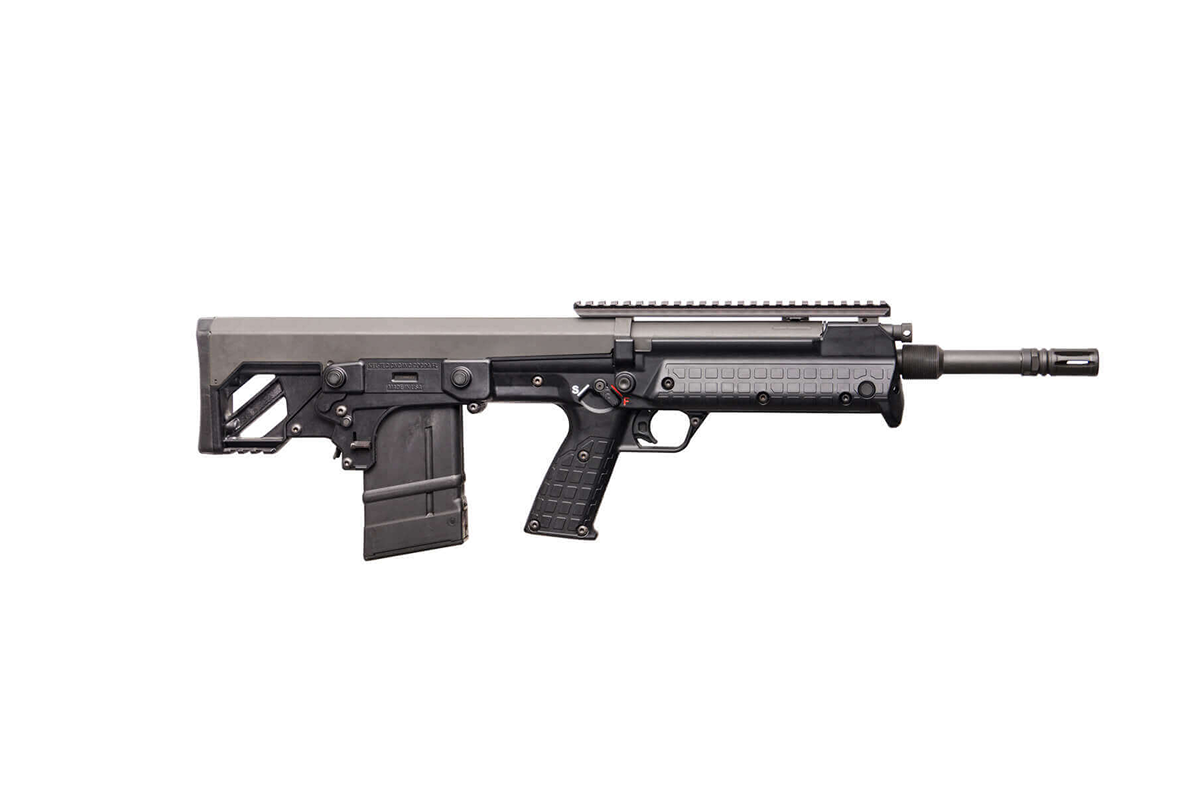
At 100 yards, the RFB consistently kept rounds on steel targets and delivered practical accuracy suitable for defensive or hunting applications. Groups often showed four shots clustered closely with one flyer slightly outside the group, a performance level still comparable to many classic battle rifles such as the M1 Garand and the M14 Rifle.
While the rifle may not consistently achieve modern sub-MOA precision standards, its accuracy is more than sufficient for engagements out to roughly 200–300 yards distances well within the intended role of a compact defensive rifle.
Field stripping the RFB differs somewhat from conventional rifles but remains straightforward. After ensuring the rifle is unloaded, two receiver pins near the magazine well are pushed out, allowing the rear portion of the receiver to pivot downward.
The action assembly and recoil springs can then be removed from the rear. Additional pins allow the handguard and magazine well assembly to separate for further cleaning access. Importantly, the Picatinny rail remains attached to the barrel assembly, preserving optic alignment during routine maintenance.
With its forward-ejection system, compact dimensions, and full-power .308 chambering, the KelTec RFB offers a unique take on the bullpup rifle concept.
While it carries some of the typical compromises associated with the bullpup layout, the design provides a powerful semiautomatic rifle in a package shorter than many carbines. For shooters seeking a compact .308 platform for defensive use, hunting, or preparedness, the RFB represents a distinctive and capable option in the modern rifle market.
Get the latest 2A news and updates, plus save on gear, guns, ammo, and accessories. Join over 1.1 million readers for our daily email
By clicking one of the buttons above, you agree to our Terms & Conditions and Privacy Policy. Cancellation takes effect at the end of the next business day.
Firearms news where precision meets passion, and every shot matters. We're proud champions of history's patriots and steadfast defenders of the Second Amendment.