Recommended Products
Sponsored

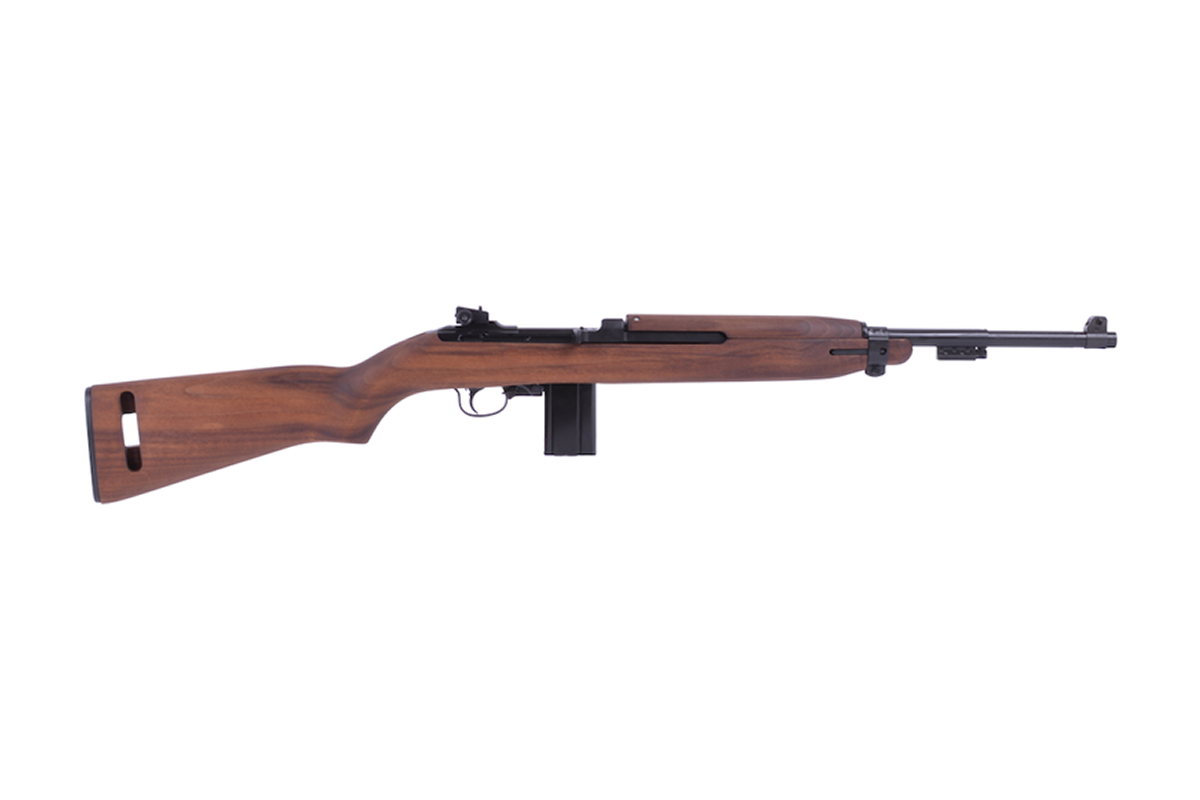
The M1 Carbine is one of the most collectible U.S. WWII firearms, with over six million produced and multiple variants including the M1, M1A1 paratrooper, and selective-fire M2. Value depends heavily on originality, manufacturer markings, and specific features like high-wood stocks or flip sights. While base rebuild models remain accessible, rare or fully transferable versions command significant premiums. Careful research and attention to detail are essential for anyone entering the carbine collector’s market.

Before the AR-15 became the dominant rifle in American gun culture, that title arguably belonged to the World War II–era M1 Carbine. Lightweight, handy, and chambered in .30 Carbine, it earned a loyal following among GIs overseas and civilians back home.
Over six million were produced during the war, and countless examples filtered into private hands through surplus sales, imports, and programs like the Civilian Marksmanship Program. Today, new-production versions are still manufactured by companies such as Auto-Ordnance and Inland Manufacturing, keeping the platform alive for modern shooters.
The result? A deep, sometimes confusing collector’s market where details mean everything.
The M1 Carbine was conceived in the frantic early years of WWII. Engineers at Winchester reportedly assembled the first working prototype in just under two weeks. The operating system was influenced heavily by David “Carbine” Williams, who had refined his short-stroke piston concepts years earlier.
The final design was a scaled-down shoulder arm chambered for the straight-walled .30 Carbine cartridge—lighter and more compact than the M1 Garand but more capable than a pistol.
Between 1942 and 1945, American industry produced approximately 6.1 million carbines. At peak output, factories were turning out tens of thousands per day. Originally costing about $45 during wartime production, that figure would translate to several hundred dollars in today’s currency. In the modern collector market, however, values vary dramatically depending on originality and condition.
Carbines fall into several broad categories:
Early M1 carbines typically featured:
Later wartime rebuilds often added:
Because many carbines were refurbished after initial service, parts from different manufacturers were mixed freely. As a result, “correct” early-war examples command premium prices, while arsenal-refinished carbines are more common and affordable.
Eleven primary contractors built M1 Carbines during WWII. Among them was Inland, a division of General Motors and the largest producer overall.
One of the more sought-after names is Rock-Ola, the jukebox manufacturer that became the second-smallest wartime producer. Rock-Ola-marked carbines carry an undeniable cool factor but collectors must be careful. During rebuild programs, barrels and small components were frequently swapped, meaning a Rock-Ola barrel does not necessarily indicate a Rock-Ola receiver.
Original manufacturer markings are stamped on the receiver heel. On early carbines with flip sights, these are clearly visible. On later adjustable-sight guns, the sight base can partially obscure the roll mark something to keep in mind when evaluating a potential purchase.
Collectors often obsess over subtle production details. A few notable ones include:
Original early “high-wood” stocks especially those for M1A1 paratrooper carbines are scarce and command significant premiums.
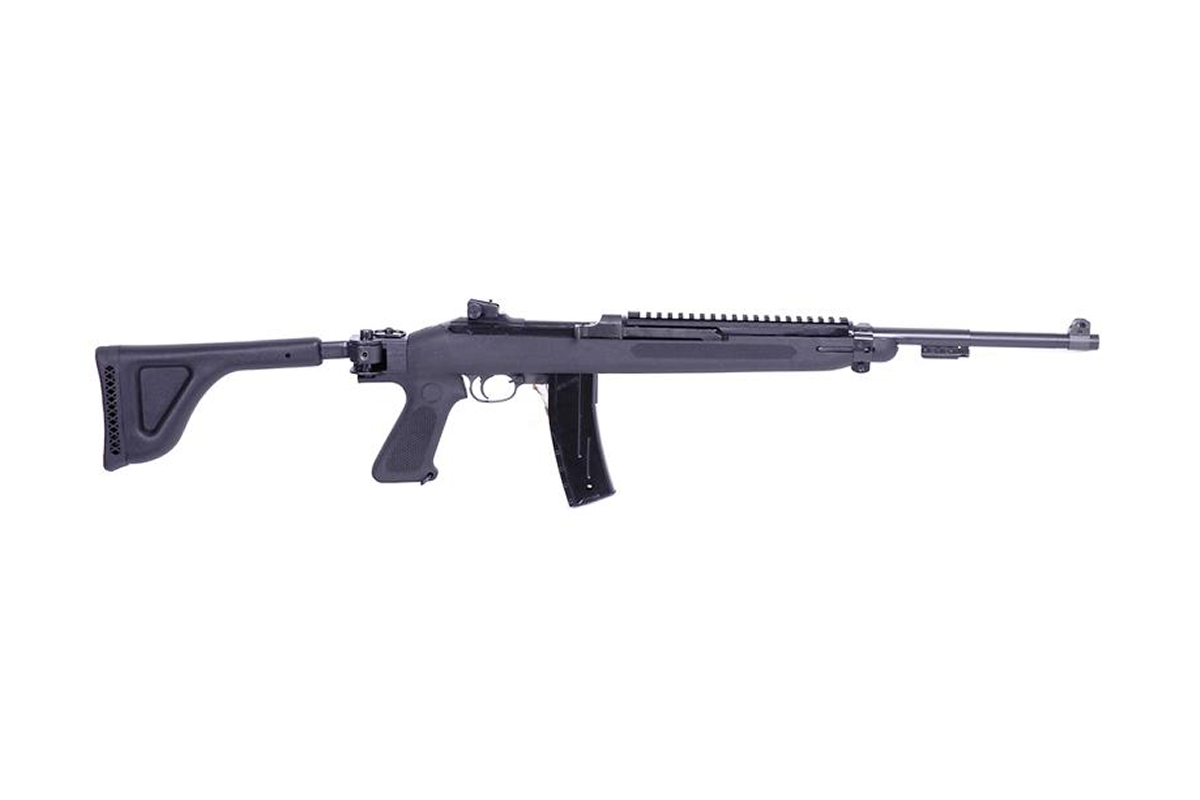
The folding-stock M1A1, produced exclusively by Inland, is one of the most desirable variants. Roughly 150,000 originals were made. Because of that scarcity, reproduction stocks are common and sometimes deceptively well executed.
Authenticating a true wartime M1A1 requires examining:
Many fakes look convincing at first glance, so due diligence is critical.
In 1944, the selective-fire M2 Carbine entered service. Some were factory-built; others were converted using GI-issued kits.
Visually, the easiest way to identify an M2 is the selector lever on the left side of the receiver. Some receivers were stamped “M2,” but under U.S. law, any receiver originally designated as such is regulated as a machine gun unless properly registered prior to 1986.
Roughly 600,000 M2 carbines were produced. On the transferable machine gun market, prices often begin in the mid-five-figure range, depending on configuration and registration status.
An even rarer variant, the M3 Carbine, paired an M2 with an early infrared “Snooper Scope” night-vision system for Pacific Theater use. Only a few thousand were made, and original setups are extremely collectible.
As a general guideline:
Prices fluctuate based on condition, originality, documentation, and market demand.
Not every collector needs a museum-grade piece. A “shooter” M1 Carbine arsenal-refinished and mismatched—can still deliver plenty of enjoyment. The rifle remains:
Accessories and spare parts remain widely available, making it one of the more approachable WWII-era platforms to own and shoot.
Collecting M1 Carbines can be deeply rewarding but it’s a niche filled with nuance. Online forums, reference guides, and auction listings have made research easier than ever, which also means true bargains are increasingly rare.
Success comes down to patience, homework, and a careful eye for markings and originality. Whether you’re chasing a rare paratrooper model or simply looking for a dependable shooter with history behind it, the M1 Carbine remains one of the most iconic and collectible American military firearms ever produced.
Get the latest 2A news and updates, plus save on gear, guns, ammo, and accessories. Join over 1.1 million readers for our daily email
By clicking one of the buttons above, you agree to our Terms & Conditions and Privacy Policy. Cancellation takes effect at the end of the next business day.
Firearms news where precision meets passion, and every shot matters. We're proud champions of history's patriots and steadfast defenders of the Second Amendment.