Recommended Products
Sponsored

Few debates in the shooting world are as enduring as the comparison between the .22 Long Rifle and the .17 HMR. One is the most prolific and affordable cartridge ever produced. The other is a modern hypervelocity round designed for flat trajectories and explosive varmint performance.
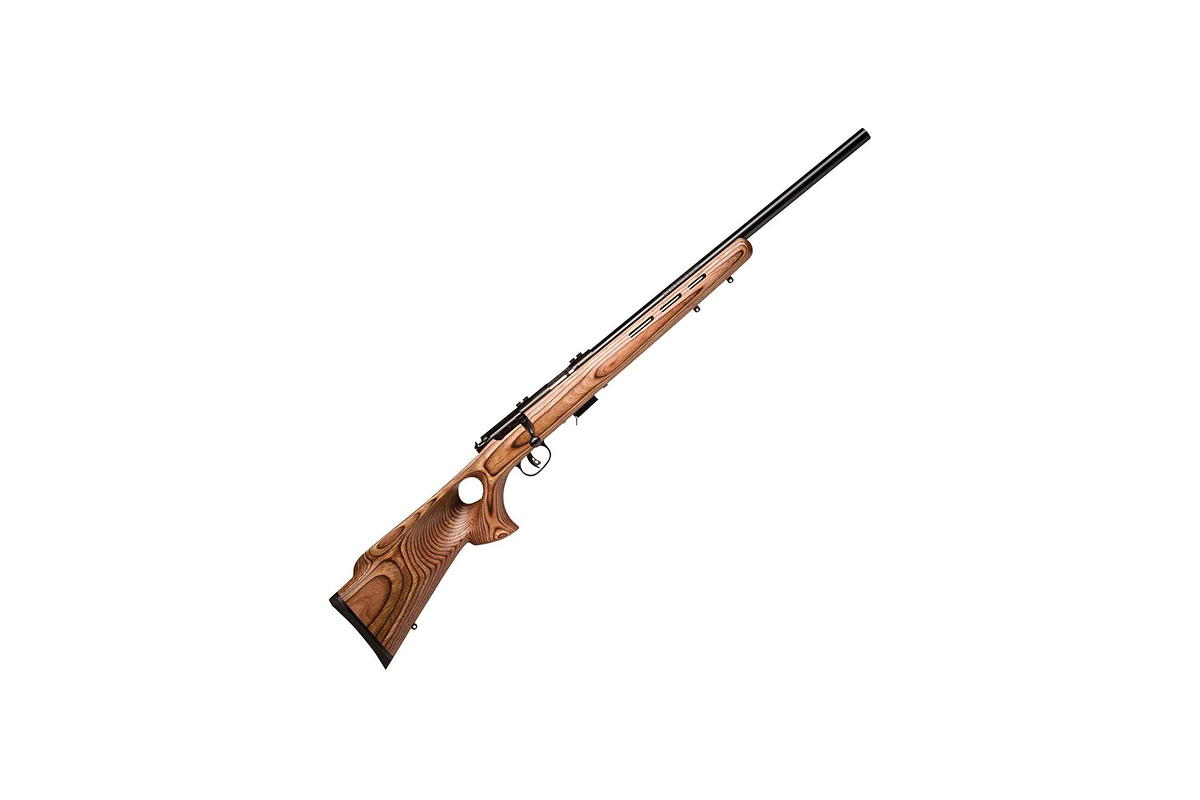
Introduced in 1887 by J. Stevens Arms & Tool Company, the .22 LR evolved from earlier rimfire designs like the .22 Short and .22 Long. It went on to become the most widely produced cartridge in the world, with annual production measured in the billions.
Standard loads typically push a 40-grain bullet around 1,100–1,200 fps from a rifle barrel. While modest in energy, the .22 LR offers reliable penetration and practical accuracy to about 100 yards.
There are also specialty loads:
If versatility and cost matter most, the .22 LR is hard to beat.
The .17 HMR (Hornady Magnum Rimfire) was introduced in 2002 by Hornady in collaboration with Marlin Firearmsand Ruger. By necking down the .22 WMR case to accept a .17-caliber projectile, designers created a remarkably fast and flat-shooting rimfire.
Typical specs:
That’s more than double the velocity of standard .22 LR loads.
The tradeoff? Cost. .17 HMR ammunition is typically several times more expensive per round than bulk .22 LR.
%20Ammo%2017%20Grain%20Polymer%20Tip%20Box%20of%20200.png)
A classic example of a .22 LR platform is the Ruger 10/22, arguably the most popular rimfire rifle in history. Affordable, reliable, and endlessly customizable, it represents the accessible side of rimfire shooting.
On the .17 HMR side, the Savage A17 delivers similar handling with a delayed-blowback system engineered specifically for the hotter cartridge. It maintains rimfire convenience but steps up velocity and range.
Both rifles are lightweight, low recoil, and suitable for recreational or field use.
Here’s the core distinction:
.22 LR
.17 HMR
Physics favors velocity in terms of energy calculation (½ mass × velocity²), and the .17 HMR leverages speed to generate impressive downrange performance despite its lighter bullet weight.
If sound reduction is a priority, subsonic .22 LR is king. Paired with a suppressor, it offers exceptionally quiet performance.
The .17 HMR, by contrast, remains supersonic and produces a sharper report even when suppressed.

For the recreational shooter:
For the varmint hunter stretching distance:
If you want affordability, versatility, suppressed performance, and proven small-game capability, the .22 LR remains unmatched.
If you need speed, flat trajectory, and explosive terminal effect on small varmints at extended rimfire distances, the .17 HMR may be the better tool.
Neither cartridge replaces the other. They simply solve different problems.
Choose based on your mission and you’ll never feel undergunned.
Get the latest 2A news and updates, plus save on gear, guns, ammo, and accessories. Join over 1.1 million readers for our daily email
By clicking one of the buttons above, you agree to our Terms & Conditions and Privacy Policy. Cancellation takes effect at the end of the next business day.
Firearms news where precision meets passion, and every shot matters. We're proud champions of history's patriots and steadfast defenders of the Second Amendment.