Recommended Products
Sponsored

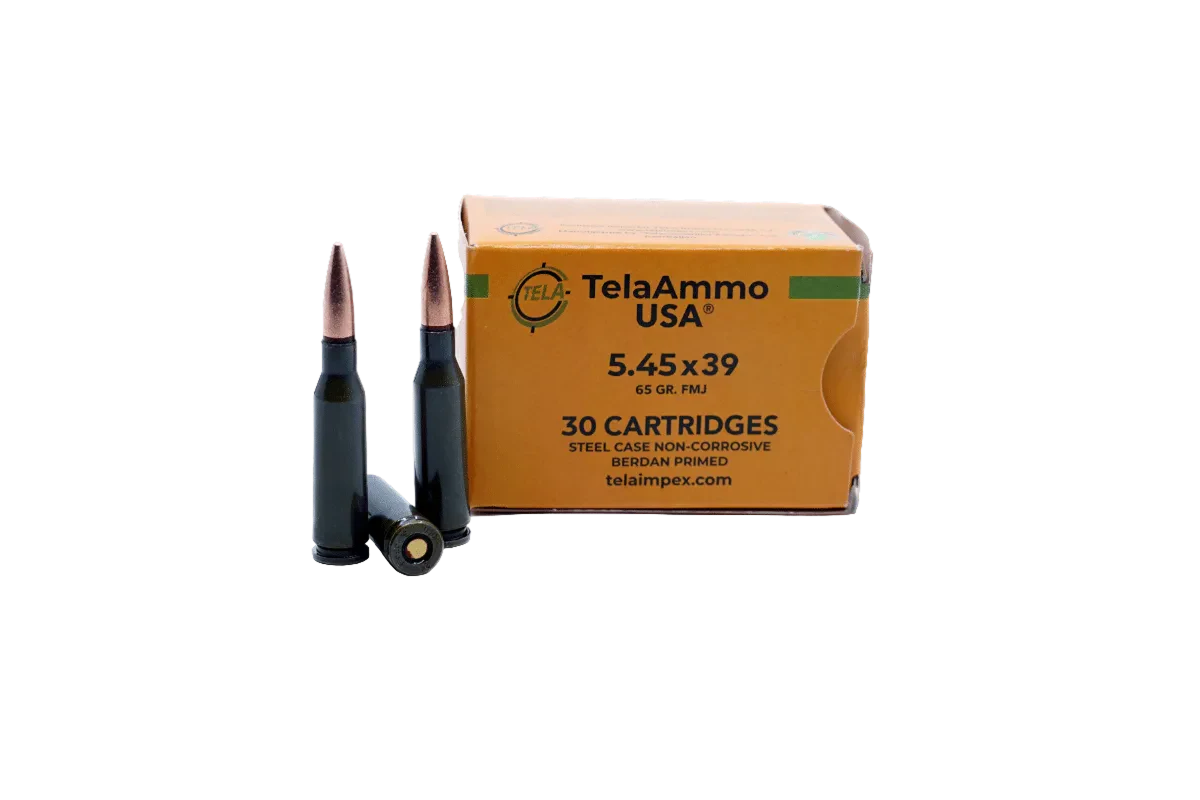
For decades, two Soviet-designed cartridges carved out a loyal following among American shooters: the 5.45x39mm and the 7.62x39mm. Born of military necessity and refined through global conflicts, both rounds earned reputations for reliability, battlefield effectiveness, and affordability. But today, a different fight is unfolding not on distant soil, but on gun store shelves across the United States. With import bans, shrinking surplus supplies, and rising costs, many shooters are asking a simple question: are these calibers still viable here?

Introduced in 1974, the 5.45x39mm was developed to modernize Soviet infantry firepower. It replaced the older 7.62x39mm in frontline service and powered the AK-74 platform. Lighter recoil, flatter trajectory, and reduced ammunition weight made it a practical evolution in small-arms doctrine.
For American shooters, however, the round’s popularity was fueled less by innovation and more by economics. Surplus 7N6 ammunition cheap, plentiful, and effective made AK-74 pattern rifles an affordable way to enjoy high-volume shooting.
That era is over.
Steel-core surplus imports have been banned, and Russian commercial ammunition is no longer entering the U.S. market. While companies like Hornady continue to produce quality 5.45 loads, they come at a premium price. What was once a budget-friendly caliber now costs significantly more per round.
Reloading presents its own challenges. Brass cases are limited, projectile selection is narrower than more common .22-caliber bullets, and scaling up for bulk shooting requires effort and expense. As a result, many manufacturers are focusing instead on AK-style rifles chambered in 5.56 NATO, which enjoys abundant domestic production.
The 5.45x39mm remains an excellent cartridge from a design standpoint soft-shooting, accurate, and effective. But without a steady and affordable ammunition pipeline, its long-term commercial outlook in the U.S. appears uncertain.

If the 5.45x39mm is fighting for relevance, the 7.62x39mm stands on firmer ground.
Originally fielded in rifles like the AK-47 and SKS, the cartridge became one of the most widely used intermediate rounds in the world. Its reputation for reliability and practical effectiveness carried over easily into the American civilian market.
Hunters adopted it for deer-sized game. Recreational shooters embraced it for affordable range time. Firearm manufacturers chambered it in everything from traditional AK platforms to AR-pattern rifles and bolt guns.
While the loss of inexpensive Russian imports has undeniably raised prices, the 7.62x39mm benefits from one major advantage: domestic production. Numerous American ammunition companies manufacture it, and modern expanding hunting loads are widely available. Boxer-primed brass and component bullets are common, making it straightforward to reload in volume.
The biggest shift has been economic rather than existential. What was once a bargain-basement caliber is now priced closer to mainstream rifle cartridges. That reduces some of its appeal particularly for high-volume shooters but it does not threaten its survival.
Unlike the 5.45x39mm, the 7.62x39mm has diversified far beyond surplus imports. That diversity gives it resilience.
The American firearms market is driven by availability and affordability as much as performance. Cartridges that are easy to source, easy to reload, and supported by domestic industry tend to endure.
In that environment:
Neither cartridge is disappearing from global military service anytime soon. But in the U.S. commercial space, momentum matters.
For shooters considering a new rifle purchase today, practical concerns ammunition cost, supply stability, and long-term support may outweigh nostalgia or historical appeal. Those realities will shape the future of both calibers more than their proven battlefield records ever could.
The Cold War may be history, but its cartridges are still navigating a modern American market that demands something different: consistency, availability, and value.
Get the latest 2A news and updates, plus save on gear, guns, ammo, and accessories. Join over 1.1 million readers for our daily email
By clicking one of the buttons above, you agree to our Terms & Conditions and Privacy Policy. Cancellation takes effect at the end of the next business day.
Firearms news where precision meets passion, and every shot matters. We're proud champions of history's patriots and steadfast defenders of the Second Amendment.