Recommended Products
Sponsored

From a converted chicken coop to one of the world’s largest rimfire producers. Tucked into the rolling hills of Lewiston, where the Snake and Clearwater rivers converge, sits one of the most important ammunition factories in the United States. Surrounded by big-game country and legendary bird hunting, it’s fitting that this small Idaho city became home to a rimfire giant: CCI. For decades, CCI has been synonymous with reliable .22 LR performance. But how did it get there and how does it keep up with relentless demand in today’s market?
The story starts after World War II, when Richard “Dick” Speer relocated from Seattle to join his brother Vernon in Lewiston. Vernon had already founded Speer Bullets, supplying jacketed bullets to a booming postwar reloading market.
Dick saw opportunity in cartridge case production another component in short supply. To avoid confusion between two companies sharing the Speer name, Dick and business partner Arvid Nelson formed Cascade Cartridges, Inc. The initials would soon become far more recognizable than the full name.
Though early cartridge-case production struggled, CCI found its footing manufacturing primers. Demand from reloaders and the military fueled rapid growth. Production expanded onto a 17-acre former chicken farm south of town. The farmhouse became office space. The coops became manufacturing buildings.
In 1962, CCI introduced a product that would cement its reputation: the Mini-Mag .22 LR. More than six decades later, it remains one of the most trusted rimfire loads on the market.

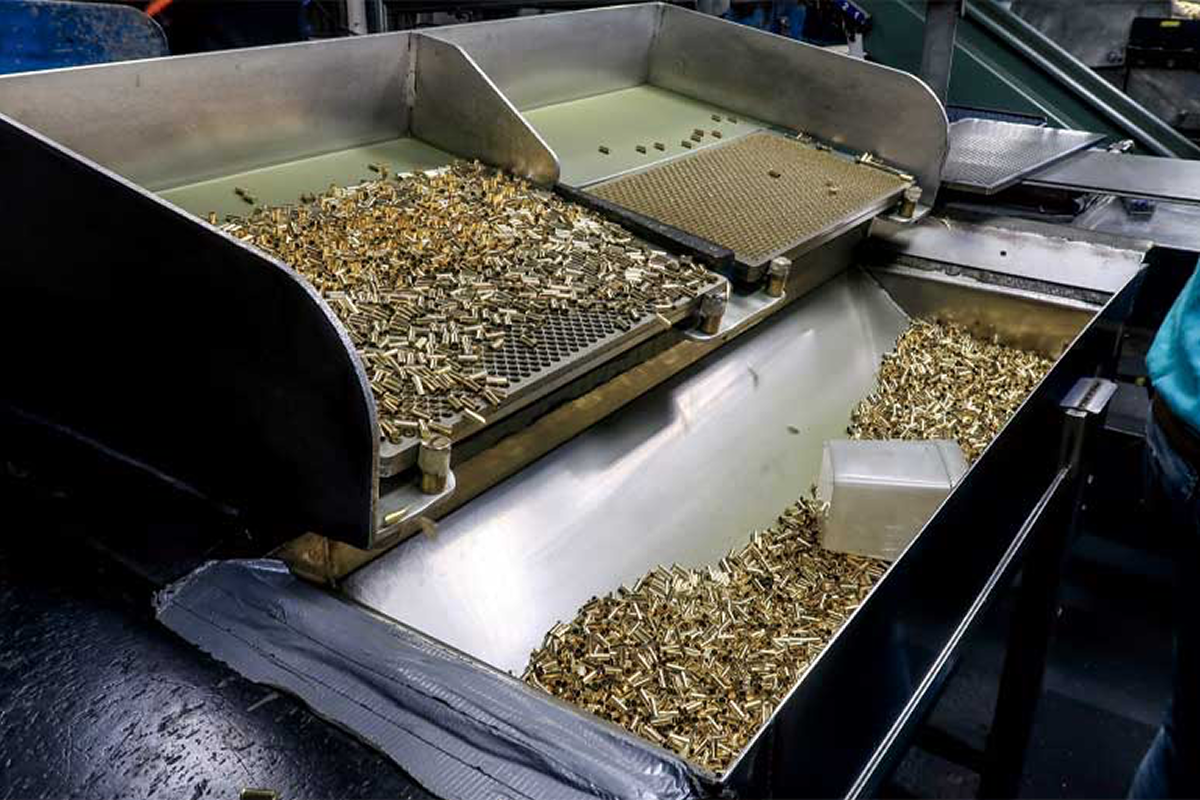
Touring the facility today reveals a fascinating blend of legacy machinery and cutting-edge automation. Some equipment has been refined over generations; other systems were designed in-house by company engineers to improve efficiency and quality control.
CCI now operates under the umbrella of Vista Outdoor, alongside Speer. Together, the facilities produce staggering quantities of rimfire ammunition daily running 24 hours a day to meet global demand.
One standout statistic: while traditional rimfire production can involve lengthy material flow cycles, CCI’s newer Southport facility reportedly compresses turnaround time dramatically. That efficiency helps stabilize output and control costs crucial in a market where rimfire demand rarely slows.
And the workforce? Many employees have spent decades on the same production lines, building deep institutional knowledge. That kind of tenure translates into consistency something rimfire shooters value highly.
While Mini-Mags and Stingers remain staples, CCI hasn’t stood still.
Clean-22, for example, features a polymer-coated projectile that reduces lead fouling and exposure. Offered in both high-velocity (red) and subsonic (blue) variants, it’s particularly appealing to suppressed shooters looking to minimize residue buildup.
On the defensive side, Speer’s Gold Dot .22 WMR Short Barrel load applies bonded hollowpoint technology to rimfire ammunition a rare approach in that category. Designed for compact handguns, it aims to deliver reliable expansion even from short barrels.
CCI also continues to support niche but passionate followings. The .17 Mach 2 built from a necked-down Stinger case pushes lightweight bullets at over 2,000 fps. Flat-shooting and fun, it remains a favorite among small-game hunters and varmint shooters who appreciate rimfire precision.
And for ultra-quiet shooting, the Quiet-22 load sends a 40-grain bullet at approximately 710 fps. In the right setup, it’s impressively discreet ideal for backyard pest control where legal and safe.

Modern ammunition manufacturing requires careful environmental stewardship, especially in regions close to waterways. CCI has reportedly implemented processes that drastically reduce water consumption in rimfire production reusing and filtering water while minimizing waste discharge.
Such measures are increasingly important as manufacturers balance high output with regulatory and ecological responsibility.
Rimfire ammunition occupies a unique space in the shooting world. It’s where beginners learn fundamentals. It’s how seasoned shooters practice economically. It’s the backbone of small-game hunting and recreational marksmanship.
Behind every blue plastic box is an enormous amount of engineering, logistics, and labor. Visiting CCI’s Idaho operation makes one thing clear: rimfire may be small in size, but producing it at scale and producing it well is anything but simple.
For generations of shooters, CCI has been a go-to choice not just because of tradition, but because of trust. And after seeing the machinery spin and hearing the steady hum of production lines, it’s easy to understand why that trust endures.
Get the latest 2A news and updates, plus save on gear, guns, ammo, and accessories. Join over 1.1 million readers for our daily email
By clicking one of the buttons above, you agree to our Terms & Conditions and Privacy Policy. Cancellation takes effect at the end of the next business day.
Firearms news where precision meets passion, and every shot matters. We're proud champions of history's patriots and steadfast defenders of the Second Amendment.