Recommended Products
Sponsored

Adopted in the late 1980s, China’s 5.8×42mm cartridge was designed to do something few military rounds have successfully achieved: replace both an intermediate rifle cartridge and a full-power machine gun round with a single unified caliber. More than three decades later, it remains one of the most unique service cartridges in the world.

When China introduced the 5.8×42mm in 1987, it marked a deliberate departure from Soviet standards like the 7.62×39mm and 7.62×54mmR. At the time, most major powers were standardizing around small-caliber, high-velocity (SCHV) cartridges such as 5.56×45mm NATO and 5.45×39mm.
China’s goal wasn’t just modernization it was independence. The 5.8×42mm was intended to:
Over time, that vision evolved into a multi-generation development effort.
The DBP-87 (“Cartridge, Infantry Rifle, Standard”) was the first 5.8×42mm variant. It launched a 64-grain FMJ boat-tail projectile at approximately:
Key design features included:
Unlike the mild steel core of 5.45×39mm, the DBP-87 used a hardened penetrator designed to defeat 1980s body armor at ranges up to 400 meters.
Accuracy from standard service rifles averaged around 2.5 MOA.

Introduced shortly after, the DVP-88 was designed to replace 7.62×54mmR in machine gun and designated marksman roles.
It featured:
While technically interchangeable, sustained use of heavy ball in standard rifles increased wear. Conversely, using the lighter load in machine guns could reduce reliability and long-range performance.
Interestingly, later information revealed that the heavy ball round partially replaced a cancelled Chinese 6.8mm machine gun project from the late 1970s.
Developed to improve reliability and reduce fouling, the DBP-95 introduced:
Ballistics remained identical to the DBP-87, but durability and consistency improved. Production expanded to multiple factories, resulting in slight case and primer variations.
China also fielded several specialty rounds:
Each maintained compatibility within the broader 5.8×42mm ecosystem.
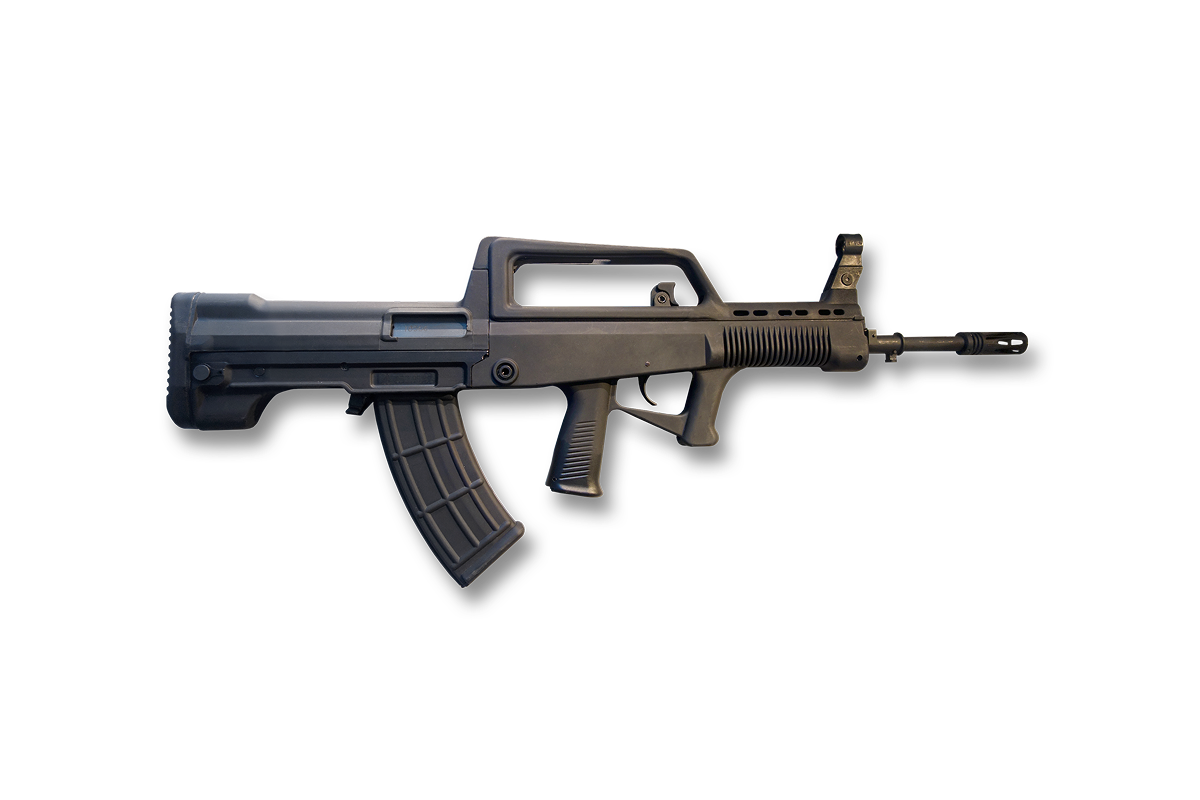
One of the strangest members of the family is the DBS-06 underwater cartridge.
Designed for use in the QBS-06 underwater assault rifle itself derived from Russia’s APS rifle this round fires a 5-inch steel or tungsten dart that stabilizes hydrodynamically underwater.
It remains a highly specialized round used by Chinese naval and special operations units.
By 2010–2011, China introduced a major update alongside modernized rifles.
The DBP-10 was designed to unify light and heavy ball roles across:
It fires a 71-grain projectile at roughly:
Despite slightly lower pressure (around 42,000 psi), performance closely mirrors the older heavy ball load thanks to improved propellants and materials.
One engineering challenge: different Chinese service rifles used varying barrel twist rates. The DBP-10 was optimized for faster twist barrels, which may reduce accuracy in older rifles.
This variant uses a tungsten penetrator and offers significantly improved armor penetration at long range. It features a black-tipped projectile and heavier 84+ grain bullet weight.
Designed specifically for bolt-action precision rifles, this load:
Projectile weight exceeds 86 grains and emphasizes consistency over penetration.
Among today’s service cartridges, the 5.8×42mm sits between:
Its heavier projectiles and strong penetrator design give it a reputation for better long-range armor performance than early 5.56 loads, though exact real-world comparisons remain limited due to scarce independent testing.
China’s 5.8×42mm represents one of the most ambitious attempts at caliber unification in modern military history.
Over 30+ years, it evolved from:
While not adopted outside China, it reflects a long-term, internally consistent doctrine: control the entire weapons ecosystem rifle, machine gun, DMR, ammunition under a unified national standard.
Whether it ultimately proves superior to emerging Western 6mm–6.8mm cartridges remains to be seen. But as a sustained, multi-decade engineering effort, the 5.8×42mm stands as one of the most interesting modern military calibers in service today.
Get the latest 2A news and updates, plus save on gear, guns, ammo, and accessories. Join over 1.1 million readers for our daily email
By clicking one of the buttons above, you agree to our Terms & Conditions and Privacy Policy. Cancellation takes effect at the end of the next business day.
Firearms news where precision meets passion, and every shot matters. We're proud champions of history's patriots and steadfast defenders of the Second Amendment.