Recommended Products
Sponsored

Much of the renewed interest in modern compact carbines and pistols centers around a small, high-velocity bottlenecked cartridge with Cold War roots: the 5.7x28mm. Designed to solve a specific battlefield problem, the cartridge has evolved into one of the most discussed PDW rounds in the commercial market today.
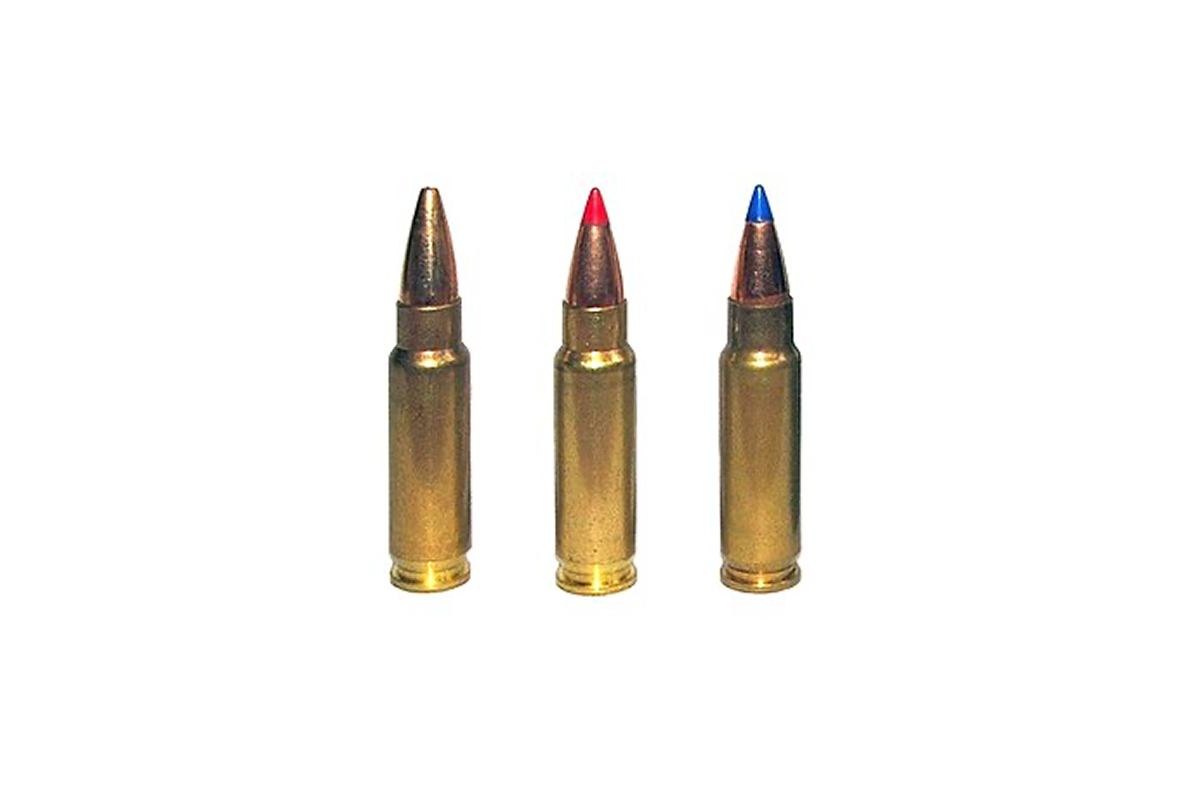
During the late Cold War, concerns grew within NATO that improving Soviet body armor could defeat standard 9x19mm ball ammunition. While rifle cartridges such as 5.56x45mm and 7.62x51mm easily penetrated early flak jackets, conventional 9mm service pistols and submachine guns were becoming less effective.
Recognizing the issue, Fabrique Nationale (FN) began development work in the 1980s on a new cartridge and weapon system. In 1990, NATO formally acknowledged the need for a replacement for the aging 9mm standard.
To measure required penetration, NATO adopted the CRISAT standard (STANAG 4512), consisting of a 1.6mm titanium plate backed by 20 layers of Kevlar—designed to simulate Warsaw Pact body armor. Any new cartridge would need to defeat this target reliably.
NATO envisioned two firearm types chambered in the new cartridge:
This concept became known as the Personal Defense Weapon (PDW) — intended for vehicle crews, support troops, and personnel not primarily armed with rifles.
FN answered with two entirely new platforms:
Both were chambered in the newly developed 5.7x28mm cartridge.
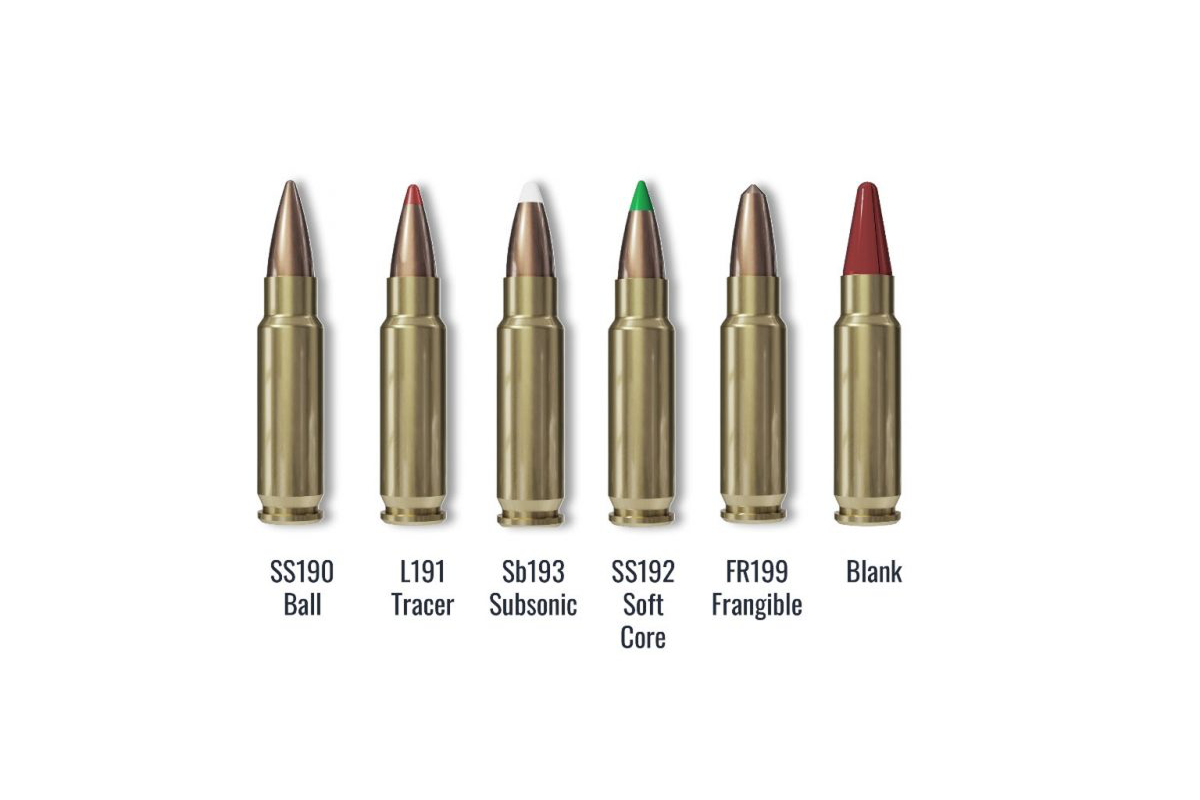
The 5.7x28mm is a compact bottlenecked cartridge featuring:
The original prototype load, SS90, launched a 23-grain polymer-core projectile at roughly 2,800 fps. It was later replaced by the SS190 in 1994.
The SS190 features:
From a P90’s 10.2-inch barrel, velocity averages approximately 2,346 fps. Despite high velocity, recoil is roughly 30% lighter than a standard 9mm NATO load due to the projectile’s low mass.
When fired from a P90, SS190 can:
Soft tissue penetration typically measures between 11 and 13.5 inches.

During NATO trials, Heckler & Koch developed a competing PDW system chambered in 4.6x30mm, most notably the Heckler & Koch MP7. Despite extensive evaluations, NATO politics ultimately prevented full replacement of 9mm service weapons.
FN produced several additional variants:
The subsonic load was designed for suppressed use, expanding the cartridge’s operational flexibility.
Although never formally adopted across NATO, the 5.7x28mm has been fielded by military and law enforcement units worldwide, including the United States Secret Service.
The cartridge gained international attention during the 1997 Japanese Embassy hostage rescue in Lima, Peru, where a P90 reportedly defeated a hostile’s body armor during the assault.
In the United States, civilian interest in the 5.7x28mm has surged in recent years. Shooters often cite:
However, one common criticism remains: ammunition cost and limited availability compared to 9mm.
Even so, the 5.7x28mm maintains a strong and loyal following. Originally engineered as a solution to Cold War armor concerns, it has carved out a unique niche in both military history and the modern sporting market.
Get the latest 2A news and updates, plus save on gear, guns, ammo, and accessories. Join over 1.1 million readers for our daily email
By clicking one of the buttons above, you agree to our Terms & Conditions and Privacy Policy. Cancellation takes effect at the end of the next business day.
Firearms news where precision meets passion, and every shot matters. We're proud champions of history's patriots and steadfast defenders of the Second Amendment.